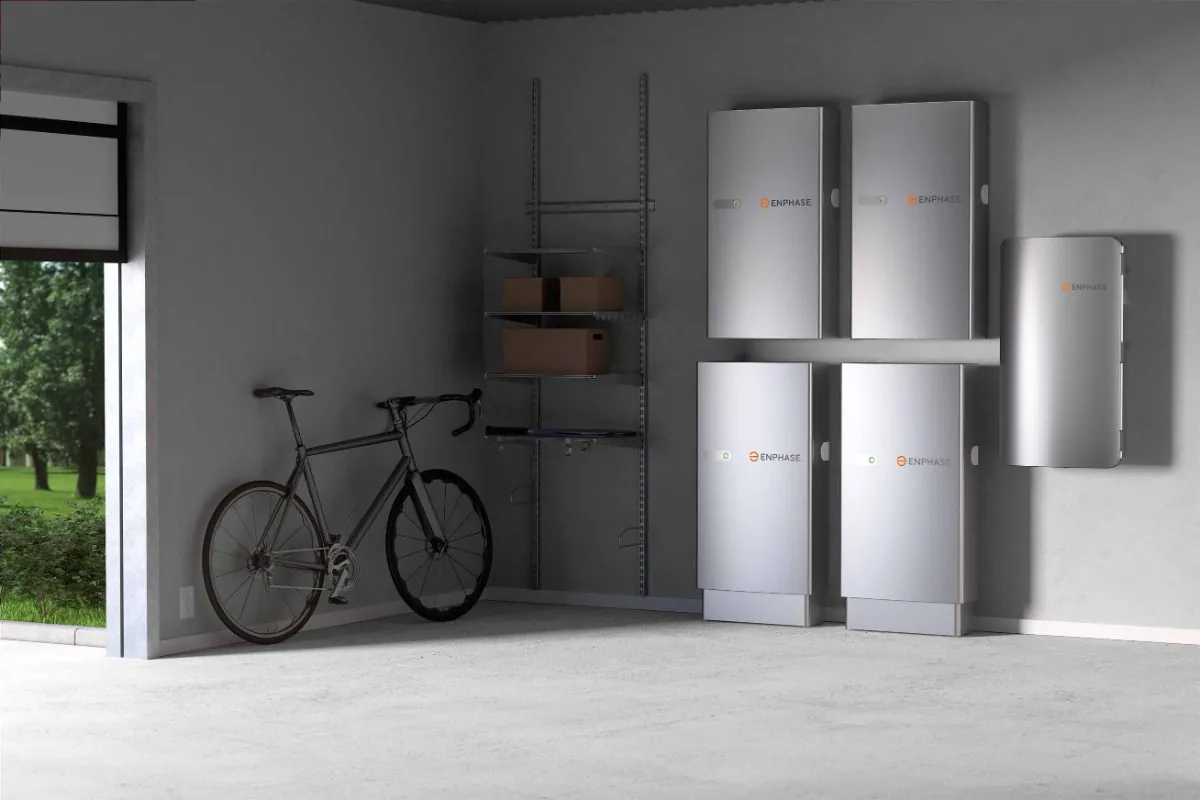
As more homeowners invest in solar energy, choosing the right battery storage and inverter system is crucial. Two of the most popular options are the Tesla Powerwall 3 and the Enphase microinverter system paired with the Enphase 5P battery. Both solutions offer unique advantages, but which is the best choice for your home? Here we compare these technologies based on performance, efficiency, scalability, and overall value.
Tesla Powerwall 3: all-in-one battery backup
The Tesla Powerwall 3 is an integrated battery and inverter system designed for whole-home backup and solar energy optimization.
- Integrated inverter — unlike previous versions, the Powerwall 3 includes an integrated solar inverter for seamless operation. One unit can support up to 20 kW DC of solar.
- High power output — provides 11.5 kW peak power output, supporting more appliances during outages.
- Whole-home backup — ideal for homeowners looking for uninterrupted power during grid failures.
- Large capacity — stores 13.5 kWh per unit, with the ability to stack multiple units.
- Tesla ecosystem compatibility — management and monitoring share the same app as a Tesla vehicle or wall charger.
- Ease of installation — with the available Tesla Backup Switch, a Powerwall 3 can be added to most homes without costly upgrades.
Enphase microinverters + 5P battery: modular and reliable
The Enphase system takes a different approach, separating the inverter and battery components for a more customizable setup.
- Microinverter technology — instead of a single inverter, Enphase uses microinverters on each panel, improving performance, reliability, and monitoring.
- Enphase 5P battery — stores 5 kWh per unit, with the flexibility to stack multiple units for larger storage.
- Greater scalability — easily expand storage and generation capacity over time.
- Optional generator integration — add an extra layer of backup with standby generator integration.
- Superior safety — uses lithium iron phosphate (LFP) chemistry for enhanced safety and longevity.
Performance and efficiency
- Energy efficiency: Enphase microinverters optimize each solar panel individually, reducing shading losses and increasing total energy output. The Powerwall 3, while efficient, relies on a central inverter, which can reduce performance if one panel underperforms.
- Battery power output: the Powerwall 3 provides 11.5 kW of peak power, significantly higher than a single 5 kWh Enphase 5P battery. However, Enphase batteries can be stacked for increased capacity.
- Backup capabilities: the Powerwall 3 is built for whole-home backup, whereas Enphase batteries provide modular backup, prioritizing essential loads unless multiple units are installed.
Side by side
| Tesla Powerwall 3 | Enphase Microinverters + 5P | |
|---|---|---|
| Capacity per unit | 13.5 kWh | 5 kWh |
| Peak output | 11.5 kW | Scales with units installed |
| Inverter | Integrated central inverter | Microinverter per panel |
| Backup style | Whole-home | Modular / essential loads |
| Scalability | Stack additional units | Highly modular — start small, expand |
| Chemistry | Lithium-ion | Lithium iron phosphate (LFP) |
| Best for | All-in-one whole-home backup | Panel-level optimization and flexibility |
Scalability and flexibility
- Tesla Powerwall 3 offers a powerful all-in-one system but is less modular compared to Enphase.
- Enphase microinverters and 5P batteries allow homeowners to start small and expand their system over time, making them ideal for those who want long-term flexibility.
Cost considerations
- Tesla Powerwall 3 can significantly reduce the cost of a solar and battery system with its all-in-one solution.
- Enphase microinverters and 5P batteries allow for incremental investments with modular batteries. However, Enphase systems are generally more costly, as you have the cost of the microinverters on your roof plus a system controller that requires additional electrical work for full home integration.
Which system is right for you?
- Choose Tesla Powerwall 3 if you want an all-in-one backup system with high power output and whole-home coverage.
- Choose Enphase microinverters and the 5P battery if you prefer scalability, panel-level optimization, and enhanced safety.
Final thoughts
Both systems are excellent choices, depending on your energy needs. If you're looking for a powerful, whole-home backup solution, Tesla may be the best fit. However, if you want a modular, expandable system with advanced microinverter technology, Enphase is the better option.
Ready to choose the best system for your home?
Contact Solar Wave today for expert guidance and a free, no-obligation quote.
Explore Battery Backup
Steven Weaver
Steven is the founder of Solar Wave and has dedicated the last seven years of his career to the solar industry. After consulting for multiple solar companies across the US he founded Solar Wave in Denver, Colorado. Solar Wave is on a mission to continue the rapid deployment of residential and commercial solar in Colorado by offering the best solar equipment and installation services at the lowest prices possible.